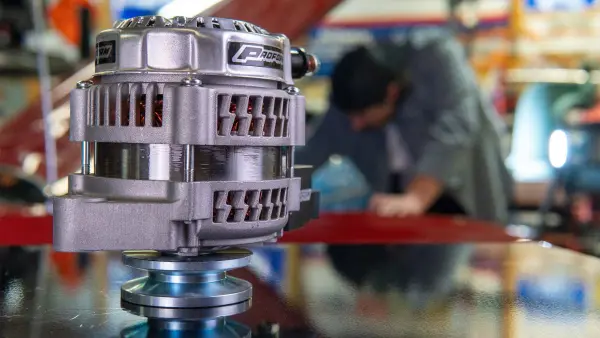

Alternator amperage is one of those specs most builders guess at. The stock unit worked fine for years, so whatever replaces it should be in the same ballpark, right?
Sometimes that logic holds. On a modified build with a different electrical load than the factory ever planned for, it's a guess that can leave you with a charging system that's constantly playing catch-up or one that's carrying more hardware than the build actually needs.
Here's how to choose alternator amperage properly.
Why Alternator Amperage Matters
An alternator's job is to keep the battery charged and power every electrical component on the car while the engine is running. Amperage is its capacity to do that work.
When total electrical demand exceeds what the alternator can supply, the battery makes up the difference. Also, a battery that's constantly compensating for an underperforming alternator will fail earlier than it should and leave you with unreliable starting and electrical behavior.
Overshooting on amperage isn't a problem in the way undershooting is, but it does add weight and cost you don't need if the application doesn't call for it. Matching output to actual demand is the right approach.
What's Actually Drawing Current on Your Build
Before picking an amperage rating, think through everything running off your electrical system. Ignition, fuel pump, and starter are the basics every build shares. Beyond that, the list depends heavily on what the car is and how it's used.
A dedicated drag car stripped down to the bare essentials – ignition, fuel pump, minimal lighting, no heat or A/C – has a genuinely low electrical demand.
A 50-amp mini alternator handles that cleanly, keeps weight off the front of the engine, and doesn't overcomplicate a simple electrical system.
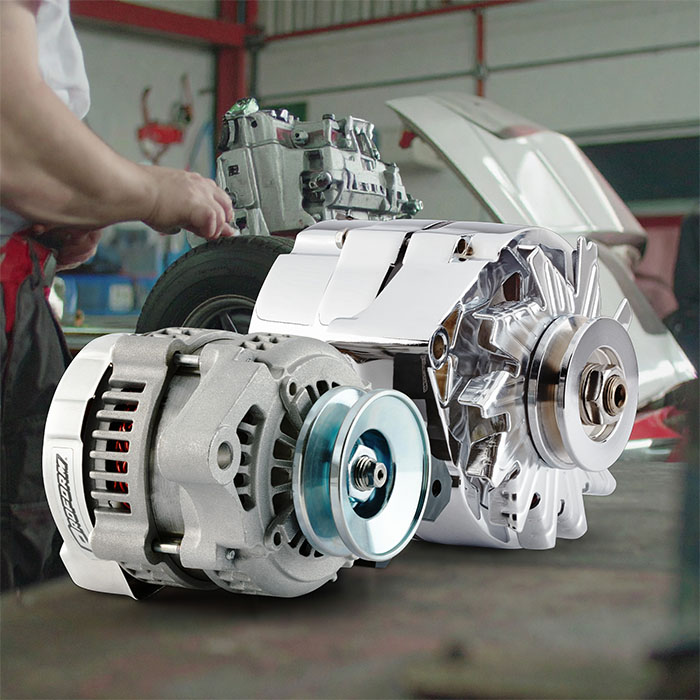
Our 50-amp chrome mini alternator weighs 6 lbs. with a 96mm housing and universal fitment. For a bracket racer or a weekend strip car that isn't running significant accessories, that's often all that's needed.
A street-driven performance car running brushless electric cooling fans, a high-output ignition system, a fuel injection conversion, or upgraded audio changes the math considerably. Electric fans alone can draw 15 to 20 amps depending on size and CFM rating.
Add a fuel injection system, upgraded lighting, and any other modern accessories and you're looking at a sustained electrical load that a 50-amp unit will struggle to keep up with, especially at idle where alternator output is at its lowest.
The Idle Output Question
Idle amperage output is where a lot of alternators fall short in real-world use. A unit rated at 100 amps at peak RPM might produce significantly less at a hot idle in traffic, which is precisely when a street car's cooling fans are running hardest and electrical demand is highest.
Our Lightning-Bolt 100-amp mini alternator addresses this directly, it produces 80 or more amps at idle and over 100 amps at the top end, from a 7 lb. unit. For a street-driven car that sees stop-and-go traffic with a full electrical load running, that idle output number matters more than the peak rating.
Matching Amperage to Application
For a dedicated race car with minimal electrical accessories, our 50-amp mini alternator covers the load without adding unnecessary weight. At 6 lbs. with a compact 96mm housing, it's the right tool for a build where every pound on the front end matters.
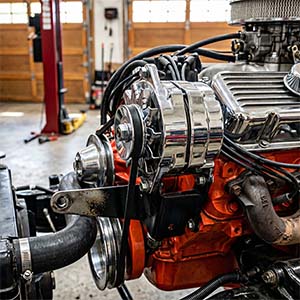
For a street performance car running stock-level accessories on a small block or big block Chevrolet®, our chrome, GM 10SI style alternators are a clean, period correct-looking upgrade over a worn stock unit, in 60-140 amp ranges.
It delivers genuine 80-amp output with 1-wire simplicity in a case style that fits standard Chevrolet performance brackets without modification.
For builds adding electric fans, fuel injection, or other modern accessories on top of a performance ignition, the 100-amp Lightning-Bolt unit or our 120-amp units give you headroom above your sustained load so the alternator isn't running at its limit under normal operating conditions.
Headroom matters, an alternator that's constantly near its maximum output runs hotter and wears faster than one with capacity to spare.
For high-demand street machines or builds with significant accessory loads, our 140-amp GM 10SI style unit is the right call. Same case style and mounting configuration as the lower-output units, same 1-wire hookup, just more capacity for builds that genuinely need it.
MOPAR® Applications
Chrysler builds running the original square-back alternator style have the same amperage considerations as any other application.
Our Officially Licensed MOPAR 110-amp alternator fits 1960-1987 Chrysler V8 and Slant Six applications with a factory original case style and choice of Chrome, natural or the Signature Black Crinkle Finish.
For a MOPAR build that's been upgraded with electric fans or modern ignition, 110 amps gives you the output to support those additions while maintaining correct appearance under the hood.
A Simple Way to Estimate Your Needs
Add up the approximate amperage draw of everything running simultaneously at idle – ignition system, fuel pump, electric fans, lights, and any other accessories.
That number is your sustained load. Add 20 to 30 percent on top of that as a buffer so the alternator has headroom, and use that figure to select your output rating.
If your calculation lands at 65 amps, an 80-amp unit gives you that buffer. If it lands at 90 amps, step up to 100 or 120.
Every PROFORM Alternator is 100% New
Every alternator in our lineup is built from 100% new components using specialized manufacturing equipment and dedicated assembly jigs, then tested at both the component level and as a finished unit. Not remanufactured, not rebuilt cores.
A fresh build or a car you've put serious money into deserves a charging system built the same way.