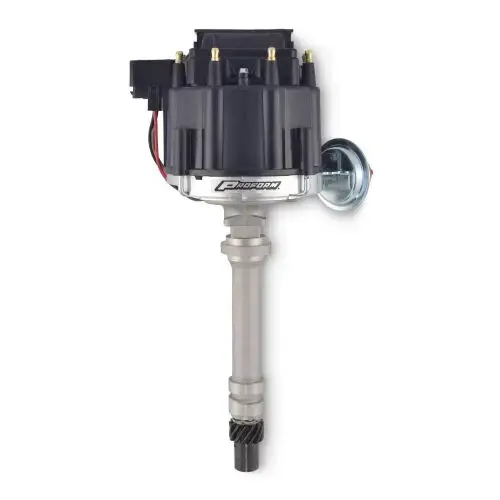

The points-style distributor that came stock on most classic American V8s works. It worked for decades.
But if you're rebuilding an engine, doing a performance upgrade, or just tired of re-gapping points every season, converting to HEI is one of the better dollars-per-improvement moves in the hobby.
The question most builders hit next is what actually separates a quality HEI unit from a cheap one that'll leave you stranded at the worst possible moment.
Here's what to look at.
What HEI Actually Does Differently
High Energy Ignition uses a magnetic trigger and electronic module instead of mechanical points to fire the coil. The practical results are a stronger, more consistent spark across the RPM range, no points to wear or adjust, and in most cases a significantly higher output voltage than a stock points system could produce.
GM introduced HEI as factory equipment in 1974 and ran it through the early 1990s on carbureted applications. The system proved itself over millions of production vehicles before the aftermarket started building performance versions of it.
A good aftermarket HEI takes the core reliability of that system and adds higher voltage output, better cap and rotor materials, and in some cases a performance advance curve suited to modified engines.
Voltage Output Matters More Than Most Builders Realize
A stock points system produces somewhere in the neighborhood of 20,000-25,000 volts under load. Most quality aftermarket HEI units produce 50,000 volts.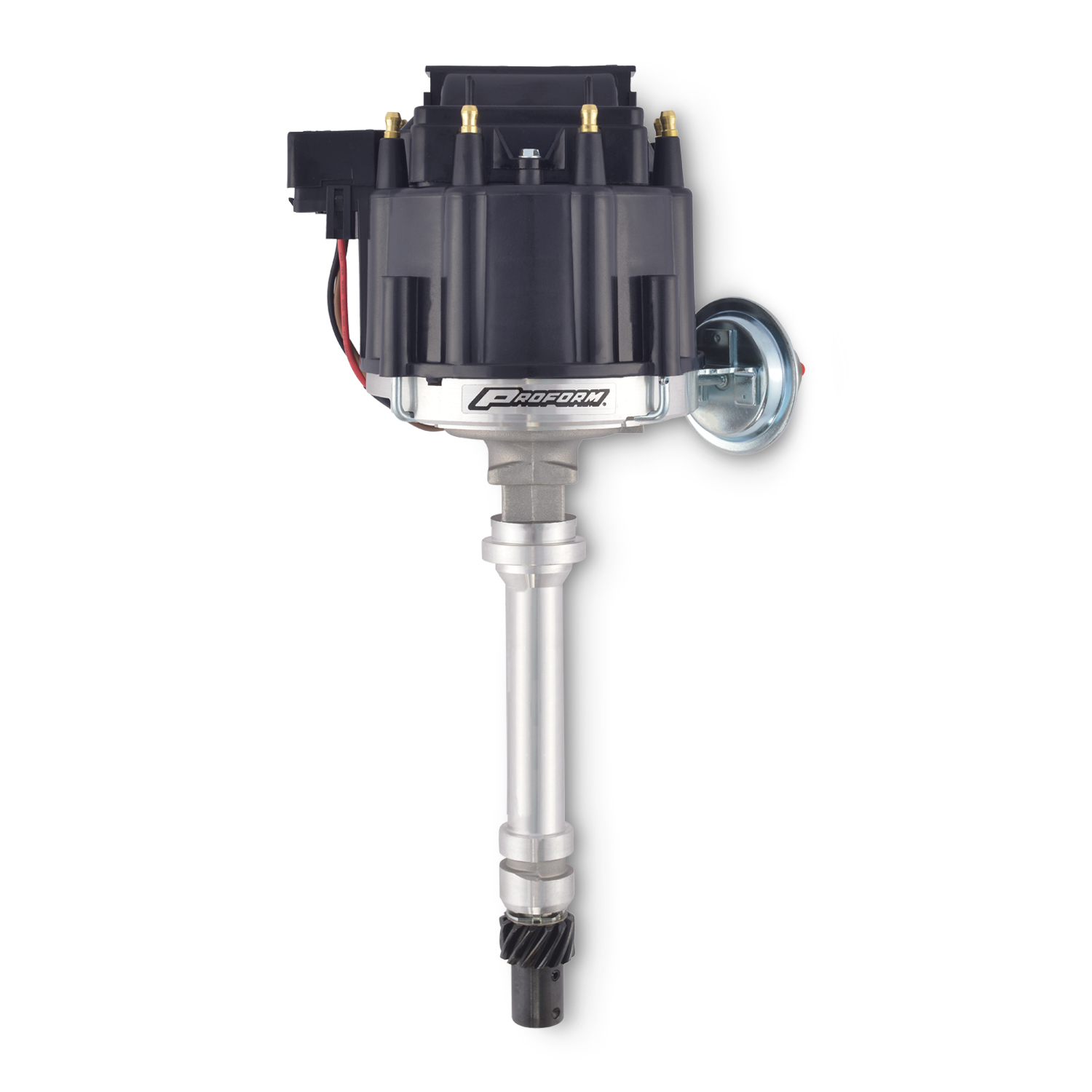
That gap has real consequences at high RPM and under boost or nitrous, where cylinder pressure increases the electrical resistance the spark has to overcome to jump the plug gap. A weak spark misfires. A 50,000 volt spark fires reliably through conditions that would drop a points system to its knees.
ProForm's HEI distributors for Chevy V8 applications (covering 1955-1982 small block and big block engines) use a built-in 50,000 volt coil with a magnetic trigger and a low-saturation ignition module.
The cap uses brass terminals, which conduct better and resist corrosion longer than the aluminum terminals found on cheaper units. Die-cast aluminum housings with a polished finish are standard across the lineup.
Coil Included vs. Coil Not Included
This is the first real decision point when shopping. Most HEI distributors in the ProForm lineup come with the coil integrated into the cap, which is the traditional HEI configuration and the simplest installation, one wire for power, done.
Some versions are available without a coil, which is the right choice when you're running an external coil for clearance reasons or pairing the distributor with a specific ignition box that has its own coil requirements.
If you don't have a specific reason to go external coil, the all-in-one setup is the path of least resistance and works well for street and mild performance applications.
Vacuum Advance vs. No Vacuum Advance
Street engines benefit from vacuum advance. It advances timing at light throttle and cruise conditions, which improves fuel economy and throttle response in normal driving. If the car sees any street time, you want vacuum advance.
Race engines often delete it. On a dedicated race car that's always at or near wide-open throttle, vacuum advance serves no purpose and introduces a variable that can cause detonation if the canister malfunctions or the line comes loose.
The no-vacuum-advance versions use a nylon lockout in place of the advance canister, it keeps the port blocked and the mechanism locked out cleanly rather than just capping a vacuum port and leaving the advance mechanism to rattle around.
ProForm offers both configurations across the Chevy lineup, including a race-series model specifically designed around the no-vacuum-advance, high-mechanical-advance setup. The race model runs 22 degrees of mechanical advance, which suits most built small blocks running aggressive cam timing.
Ford HEI Conversion
Ford's original ignition systems, the Autolite/Motorcraft points setup on early small blocks, then the Duraspark electronic systems, were never as clean or as tunable as GM's HEI. Converting a 289, 302, or 351W to HEI has been popular in the Ford community for years because the performance gain is significant and the installation is straightforward.
ProForm makes direct HEI replacement distributors for Ford 289-302 V8 engines in multiple cap colors. The cap color distinction matters on Ford applications more than it sounds, different colors indicate different terminal configurations and the color needs to match your plug wire routing and engine bay layout. Same 50,000 volt output, same die-cast aluminum housing as the Chevy units.
For 351W applications, a separate distributor fits the taller Windsor block deck height, so make sure you're ordering the correct unit for your specific Ford engine.
Chrysler Applications
The Chrysler lineup covers both LA-series engines (273-360) and B/RB engines (361-400, 413-440) in full HEI distributor form, plus conversion kits for builders who want to retain factory distributor positioning but upgrade the ignition electronics.
The LA and B/RB are different units — the engine families use different distributor housings and gear geometry, so application matching is important here the same as it is on the GM side.
Cap and Rotor Quality
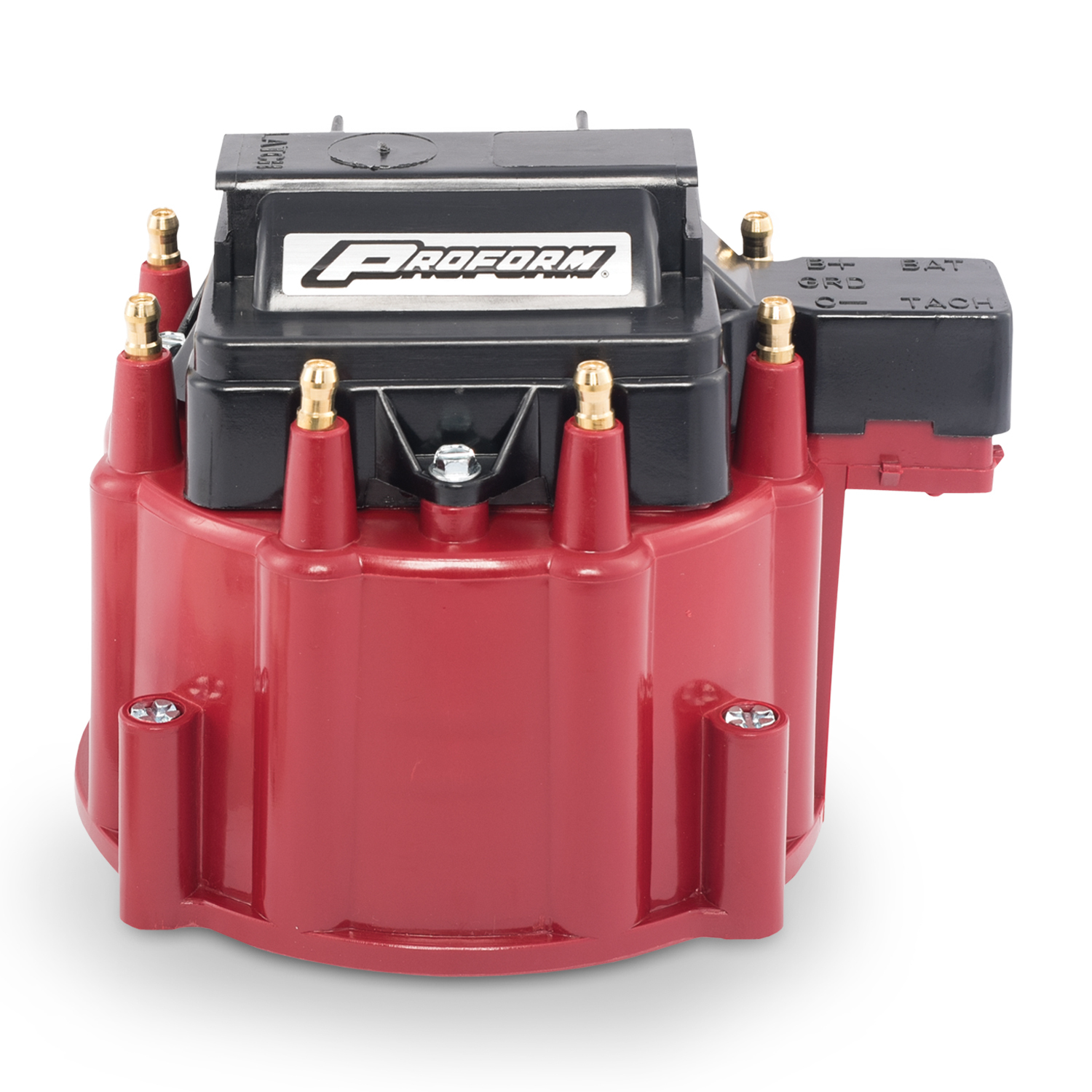 The cap and rotor are wear items that directly affect how cleanly the spark transfers. Cheap caps use aluminum or pot-metal terminals that oxidize and pit over time, increasing resistance and degrading spark quality.
Quality caps use brass terminals, which is what the ProForm race-series units spec. Alkyd material caps resist electrical tracking better than standard phenolic caps, which matters on high-output ignition systems where voltage leakage between terminals becomes a real failure mode.
Installation Considerations
An HEI distributor is a larger-diameter unit than a points distributor. On a small block Chevy with tight header primary tubes, clearance to the cap can be a real issue. Measure before you order if your header collector is anywhere near the distributor location, because pulling a distributor out and swapping it for a different style after the headers are on is a miserable afternoon.
The single-wire hookup on HEI (one 12-volt ignition-on feed to the BAT terminal on the cap) is part of the appeal, but that wire needs to be a genuine 12-volt source that only sees voltage with the key on. Running it off a switched source that drops voltage under load will hurt performance and potentially damage the module over time.
The Bottom Line
For any carbureted classic V8 still running points or an early electronic system, a quality HEI upgrade is straightforward, durable, and genuinely improves how the engine runs.
The things worth paying attention to are voltage output, cap terminal material, whether you need vacuum advance for your application, and making sure the unit is built from new components rather than remanufactured cores.
On that last point specifically, a remanufactured distributor introduces unknown wear history into a part you're counting on for reliable ignition. New components throughout is the right spec for any build you're putting real money into.