Why Adjustable Carburetors Still Matter in Modern Performance Builds
Friday, February 20, 2026
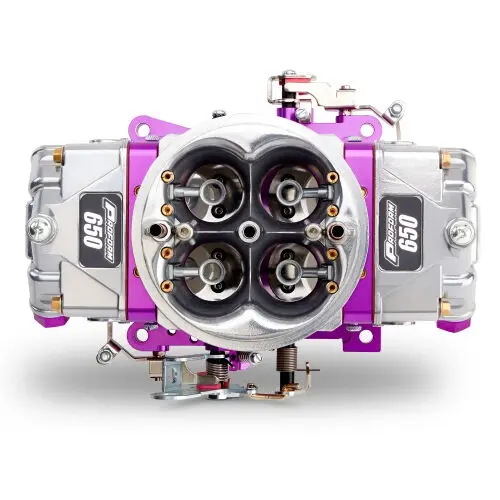
Carburetors remain a core part of performance engine builds because they offer control. Not theoretical control, but hands-on adjustability that lets builders shape airflow and fuel delivery to match how an engine actually runs.
That philosophy is what drove Proform’s original main body upgrades in the 1990s, and it still defines their carburetor lineup today. Instead of treating the carburetor as a sealed component, Proform designs carburetors and accessories around tuning access, serviceability, and real-world performance needs.
Carburetors Are Systems, Not Single Parts
A carburetor’s behavior is defined by more than its CFM rating. Main body airflow, booster design, metering blocks, fuel bowl configuration, and throttle base alignment must all work together. Changing one element without access to the others limits how precisely an engine can be tuned.
Proform carburetors are built with that reality in mind. Main bodies, fuel bowls, metering blocks, throttle base plates, and rebuild components are designed to be adjusted, updated, and serviced as a combination rather than treated as fixed hardware.
That approach allows builders to refine performance without replacing the entire carburetor when conditions or goals change.
Why Main Body and Fuel Bowl Design Matter
Airflow control starts at the main body. Booster style, signal strength, and airflow path determine how consistently fuel is introduced across operating ranges. That’s why Proform continues to redesign and improve Race Series main bodies rather than relying on legacy castings.
Fuel bowls play an equally important role. Float stability, fuel delivery under load, and compatibility with different fuel types all affect consistency. Redesigned fuel bowls allow builders to tailor fuel control for gasoline, E85, or alcohol applications without compromising reliability.
Together, these components define how the carb responds during idle, part-throttle transitions, and sustained load.
Adjustability Is What Keeps Carburetors Relevant
Modern performance engines operate across wider ranges than older combinations. Compression ratios are higher. Cam profiles are more aggressive. Fuel choices vary. That makes adjustability essential.
Proform carburetors support tuning through billet metering blocks, replaceable components, and rebuild kits that allow refinements instead of replacements. Builders can dial in fuel delivery, correct transition issues, or adapt to different track or weather conditions without starting over.
This level of adjustability is what allows carburetors to remain competitive in modern builds.
Matching Carburetor Series to Application
Proform’s carburetor lineup reflects how different engines are used.
Race Series carburetors are designed for aggressive airflow and fuel delivery in drag racing and circle track environments. Street Series options balance performance with drivability. Titan Series carburetors deliver premium features for builders who want high-end capability without race-only compromises. Black Series equivalents offer application-specific solutions with the same tuning philosophy.
Across all series, the focus remains the same: performance, adjustability, and value.
Accessories Are Part of the Carburetor, Not Extras
Fuel bowls, metering blocks, throttle base plates, and rebuild kits aren’t add-ons. They’re integral to how a carburetor functions over time. Wear components can be refreshed. Fuel delivery can be refined. Airflow characteristics can be adapted as engine combinations evolve.
Proform supports this with dedicated carburetor tools and replacement components that keep tuning straightforward and repeatable.
Built for Performance, Designed for Longevity
The reason Proform carburetors have remained relevant for decades is simple. They’re designed to be tuned, serviced, and improved, not discarded.
Instead of locking builders into a single configuration, Proform carburetors allow refinement as performance goals change. That approach delivers long-term value while maintaining the performance and adjustability enthusiasts expect.
Adjustable carburetors continue to matter because they put control back in the builder’s hands, despite common misconceptions that some parts are disposable or easy to get rid of.