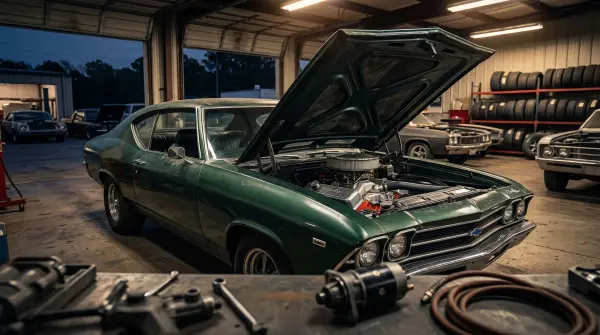

If you've built a high compression engine and tried cranking it with a stock-style starter, you already know the problem.
Slow, labored cranking, heat soak issues, and in some cases a starter that simply won't turn the engine over at all.
That's not a fluke, but all about physics, and the fix is picking a starter built for the compression ratio you're actually running.
Here's how to think through it.
Why Compression Ratio Changes Everything
The job of a high quality starter is to spin the engine fast enough to initiate combustion. At stock compression ratios, typically 9:1 or below, a standard starter has enough torque to do that without much effort.
As compression climbs, the pressure the starter has to overcome on each compression stroke increases significantly. A 14:1 or 15:1 engine fighting a starter designed for a 9:1 application is going to win that fight every time.
The answer isn't a bigger, heavier starter drawing more current. It's a smarter gear reduction design that multiplies torque mechanically so a smaller, faster-spinning motor can do more work with less electrical load.
How Gear Reduction Works
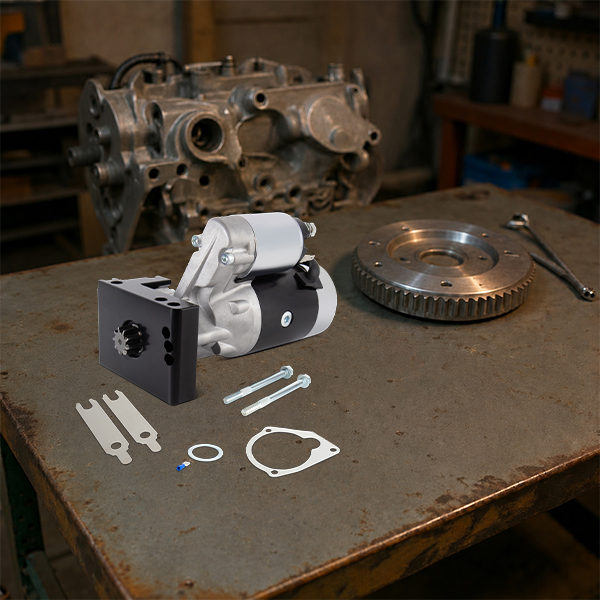
Our Pro-Series and Race Series starters both use gear reduction technology, but with different ratios tuned for different applications.
The Pro-Series uses a 3.75:1 gear reduction ratio. The smaller, faster-spinning motor drives the pinion gear through that reduction, producing high torque output while actually drawing less current than a conventional starter.
Our Pro-Series units are available in 1.4kW (1.88 HP) and 2.4kW motors depending on application, and are rated to handle compression ratios from 11:1 up to 15:1 depending on the specific part number. That covers the majority of street performance and bracket race builds running a healthy cam and compression bump.
For engines with serious cubic inches or compression ratios pushing the upper limit, our Race Series starters step up to a 4.41:1 gear reduction ratio. That additional mechanical advantage is built specifically for engines running up to 14:1 compression.
These units come in under 10 lbs. and use a polished aluminum mounting plate, built for race use without adding unnecessary weight to the nose of the engine.
Flywheel Tooth Count
This is the spec that causes more wrong purchases than any other on starters. The starter's pinion gear has to mesh correctly with your flywheel or flexplate, and those come in different tooth counts depending on the application.
Our lineup covers 153-tooth, 166-tooth, and 168-tooth flywheels, as well as combinations that fit both 153 and 168-tooth applications. Before ordering, confirm which tooth count your flywheel or flexplate uses.
On a Chevrolet small block this typically comes down to whether you're running an early or late style bellhousing pattern. Getting this wrong means the starter won't engage correctly and you'll be pulling it back off.
Application Coverage
Our Pro-Series starters cover a wide range of domestic V8 and V6 applications including Chevrolet small block, big block, and V6 engines, Ford 221-351W V8s, GM LS engines, Pontiac, Buick, and Oldsmobile V8s.
The Race Series covers Chevrolet small block, big block, and Chrysler engines.
Transmission type also matters on some applications. Our Ford starters are application-specific for automatic and manual transmission combinations since the starter positioning differs between the two.
Clearance in Tight Engine Bays
One of the main reasons builders move to a mini starter in the first place is clearance. Stock-style starters are large and can conflict with oil pans, headers, and chassis components on modified builds.
Our Pro-Series starters use an offset design that creates additional clearance for the oil pan, and many models can be rotated to find additional chassis clearance depending on your specific installation.
The billet aluminum mount with black powdercoat finish on the motor isn't just cosmetic but also keeps weight down and holds up to the heat cycles and vibration of a race or performance street environment.
New Components Only
Every PROFORM Parts starter is built from 100% new components. Not remanufactured, not refurbished cores with new housings.
When you're dropping a fresh engine into a build you've spent real money on, a reman starter with unknown wear history underneath a new coat of paint is a liability you don't need.
Picking the Right High Compression Starter
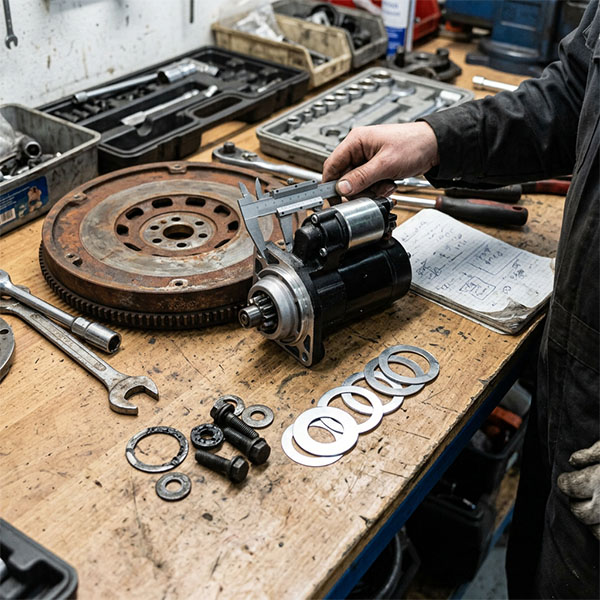
Start with your compression ratio. If you're at 11:1 to 15:1 on a Chevrolet, Ford, or GM LS application, the Pro-Series 3.75:1 units cover you with the right kW rating for your specific build.
If you're running a dedicated race engine at 14:1 on a Chevrolet or Chrysler, the Race Series 4.41:1 unit is the right tool. Confirm your flywheel tooth count, verify automatic or manual transmission fitment on Ford applications, and you're done.
A starter is one of those parts that gets ignored until it fails at the worst possible moment. Getting the right one for your compression ratio upfront is a lot less painful than diagnosing a no-start at the track.